Link to the original full interview text (in Dutch).
Name: Liselotte Roosen
Age: 34
Living in: Trondheim, Norway
Since: 28 September 2014
Personal life
How did you end up in Norway?
At the beginning of 2014 I lost my job as a psychologist due to pneumonia (caused by burnout) and I decided it was time for something new; I didn't want to work as a psychologist anymore. In August 2014 I got two job offers at once: one as a teacher of psychology at a women's university in Riyadh and the other as a PhD candidate in environmental psychology (climate change and art) at Trondheim's university in Norway. After much deliberation (it was a difficult decision), eventually I opted for Norway, because I was hoping that having a PhD would lead to even more job opportunities in the future.
Why did you decide to move to Norway? (and what was the deciding factor)
I knew for a fact that I didn't want to stay in The Netherlands... ever. The Netherlands lacks space, nature and mountains. I never really felt at home there. There are too many people, too much red tape (due to the multitude of rules and regulations) and there is too much pollution. The weather in the Netherlands is also not that great, although Norway is not much better in that respect. The winters here are very long, cold and dark. This was the main reason I was not sure about the move at first. But eventually I decided to go, mainly because temporary nature of the job, which can also result in a PhD. The contract was for three years. This suits me quite well because I like change (and after this I can always decide to go to Riyadh if I would really want to). So I went mainly for the job and not so much for the country, even though almost everything here is better than in the Netherlands, but that is true for almost every other country in my view.

What are the advantages and disadvantages of Norway compared to The Netherlands?
The advantages are that there is plenty of space due to the low population density, the mountains and the (relatively clean and abundant) nature. The disadvantages are the long, cold, dark winters, but that is not just compared to the Netherlands, but compared to all the countries I lived in. Also I find it relatively difficult to make friends here and to find like-minded people. That is tough, because now more than ever I feel a strong need to connect with others who have similar views, although the blog helps a bit in that respect.
Do you feel like there is more understanding for your lifestyle in Norway than in the Netherlands?
Not necessarily... although it is difficult to compare because I mostly got serious with moneyless living after I moved to Norway. However, it does seem to me that people in the Netherlands are generally more aware of environmental issues than the people here. Maybe that's because there is so little nature left in the Netherlands (less than 12%) and therefore people might feel more inclined to protect what is left and to get environmentally engaged. Of course it also helps if you have traveled somewhat to other places. Otherwise you may not realize that anything is missing.
Life without money
How did you come across the no-money lifestyle?
I came up with the idea after I had started dumpster diving almost daily, before I came to Norway. I liked it so much that I kept going after I moved here and got a little bit obsessed with it, because I saw so much good food being thrown away daily. Next I started to apply the idea of 'living on leftovers' to more and more aspects of my life. This is how eventually I ended up living 100% moneyless (=without spending anything). It wasn't until I started my blog that I heard about others who were also living the moneyless lifestyle; most notably Daniel Suelo and Mark Boyle. I hope to meet them someday.
How did you get started living moneyless? What are the first practical changes you made?
The first step on my journey was dumpster diving and it was inspired by environmental activist Rob Greenfield. I had been following him for about two years via Facebook and I was very inspired by his lifestyle, because he is always following his passions in everything he does and that makes him free, in contrast to most people, who believe they have to work to make a living and they have to own a home. This idea more or less gets spoon-fed to us from an early age and I think that that (in part) leads many people to give up on their dreams and even forget about them altogether.
When did you decide to take it to the next level and really want to live without money?
At the end of November 2014 I decided to take up the challenge to live entirely without spending money (other than rent), because I saw that it was possible. Shortly after that (at the start of the summer in 2015) I figured I could also try to find free housing, Around August 2015 I found a family who kindly offered me their spare room. I lived there for a few months and after about three months I moved to a farm where I got my own little cabin, with a bathroom and kitchen in the nearby barn.
What are some of the first things you realized you did not really need?
It started with the realization that I did not need to buy anything, because everything that is sold in supermarkets can also be found in the dumpsters. I have found absolutely everything there, including cleaning products and hygiene products. Even (functioning) rechargeable batteries and a charger! But the challenge has also made me question my need for all of these products. It made me ask myself the question whether I could live without, or what I would do if I would somehow run out or no longer have access to certain things. And then it turns out that most of us really don't need so much. For example, I discovered that we don't really need laundry detergent to wash our clothes. Also most hygiene products are completely unnecessary and even harmful for the body and for the environment. And recently I also came to the conclusion that we don't really need the food that is sold in supermarkets, because much more nutritious foods can be found in nature. And of course the process of finding out we don't need as much as we think we do doesn't limit itself to products: for example I also know now that I don't really need a job - and perhaps that is the most liberating discovery of all.

Can you describe what the core of moneyless living is to you?
In the beginning it was mostly about no longer wanting to contribute to the destruction of the earth via the products that I was buying. For example, if I buy a pineapple in Norway, then I know that it had to travel a long way and that I am therefore contributing to the pollution that comes with that.Or if I buy new clothes, then I know that I probably indirectly support the exploitation of workers, perhaps even child labor, and again a lot of pollution. If I buy non-organic produce I am contributing to the extinction of bees, which would mean that many plant species would disappear. I no longer wanted to carry that heavy burden and I also no longer wanted to do so much research every time I wanted to buy something to make sure that it was a sustainable choice. So when I saw that there was a way out of this destructive cycle, because so much food (and other products) gets wasted on a daily basis, I went for it. And of course another great benefit was that I could save 100% of my income to build an eco-home or to start an eco-village in the future.
While I was living moneyless I discovered that there are many more advantages to this lifestyle, which are all the result of developing a new perspective on the world. Money promotes an exchange mentality (a calculated mindset of doing each other favors to get something in return). If you live moneyless then you can slowly let go of that mindset and then you notice how much impact it has on everything you do. That mindset has made its way into almost everything now with most people.
What is your ultimate goal?
For me the goal is total freedom and my mission on a larger scale is bringing awareness to the destruction that we are all contributing to. I hope that I can inspire people to consider making changes in their lifestyle, or at least show them that it is possible to choose another way. Many people consider the status quo as their only option. Before I got started on my journey, I also thought there was no way out. And that is a very depressing and discouraging view of life, especially if you want to give your life meaning and contribute something of value to the earth (instead of just the economy).
You get a lot of questions about how you are living without money, but you are still using facilities that other people pay for. What is your opinion on this?
It is true that I am still using certain facilities that have been paid for by others. For example, I am still using internet and water/electricity, which is paid for by the owners of the farm where I live. In addition I make use of roads and other public structures. However, for me it is irrelevant that these were paid for; it does not make my moneyless life somehow less moneyless. The reason is that when people make this comment, they often mean that they think you are some kind of parasite: leaning on others for support without really contributing anything of your own.
But the purpose of my lifestyle is not to get everything for free and make my life easier. The purpose is also not to do everything by myself without the help of others and be completely independent (although I would probably have the knowledge to survive without anyone’s help for quite a while). The goal and purpose of my lifestyle is to free myself from the structures and constructs that are destructive to the earth – and unfortunately it appears that money is one of those.
If everyone would live the way I do, then of course these comments would not matter anymore, because then everybody would live for free. People would contribute to society because they believe what they are doing to be important, instead of just to make money. Unfortunately my lifestyle is not that common yet that people instantly know what it is like and what it entails. Many people also have wrong assumptions about it and incorrect associations with it.
People often seem to fear that if there would be no money, there would be more people who will no longer contribute to society in any way and therefore take advantage of other people’s hard work. I think this will not be the case. Of course there are always people who will want to lean on others and abuse the system, with or without money. But I think that in a moneyless society this will happen less. That’s because in a world without money, there are a lot more natural (and direct) consequences for inefficient behavior. For example, if your community is in a potential flooding area because it lies below sea level (such as parts of the Netherlands), then it is important for the group to make sure that the dikes and dams remain strong enough. Everyone will be motivated to contribute to this, because it is a common interest and everyone will be equally affected when things go wrong. If everyone would just rely on others to do the work, and there were only a few people left doing everything, then eventually they would get fed up and start a community elsewhere, leaving those lazy people to fend for themselves. It is the same with food: everyone will need to go get their own food and look after the food forests, because that is what sustains you. The links between between actions and consequences are much more straightforward and it is much more likely that there are natural consequences for unhelpful or selfish behavior. It is much fairer that way. In a society that uses money there is also a lot of hidden laziness: people who simply pay others so that they don’t have to do anything constructive, and even people who do have a job, but a job that only causes damage.

At the moment you have a job and you are saving all your money. You want to quit working towards the end of 2017. I am curious:
1. What will you do with the money? Three years of salary is quite a lot of money.
Yes, that is correct :) I am not sure what I will do yet exactly... Originally I wanted to save up so that I would be able to buy a block of land and start an eco-community, but because of my new lifestyle and new perspectives on life I am not so sure now. If I buy something, then I will be locked into costs again (and once again connected to money) and that is the very thing I wanted to give up and get rid of. So probably I will keep it available as a plan B, but first I will see what life will be like living the nomadic lifestyle, living completely on what nature provides.
2. What will you do with your time?
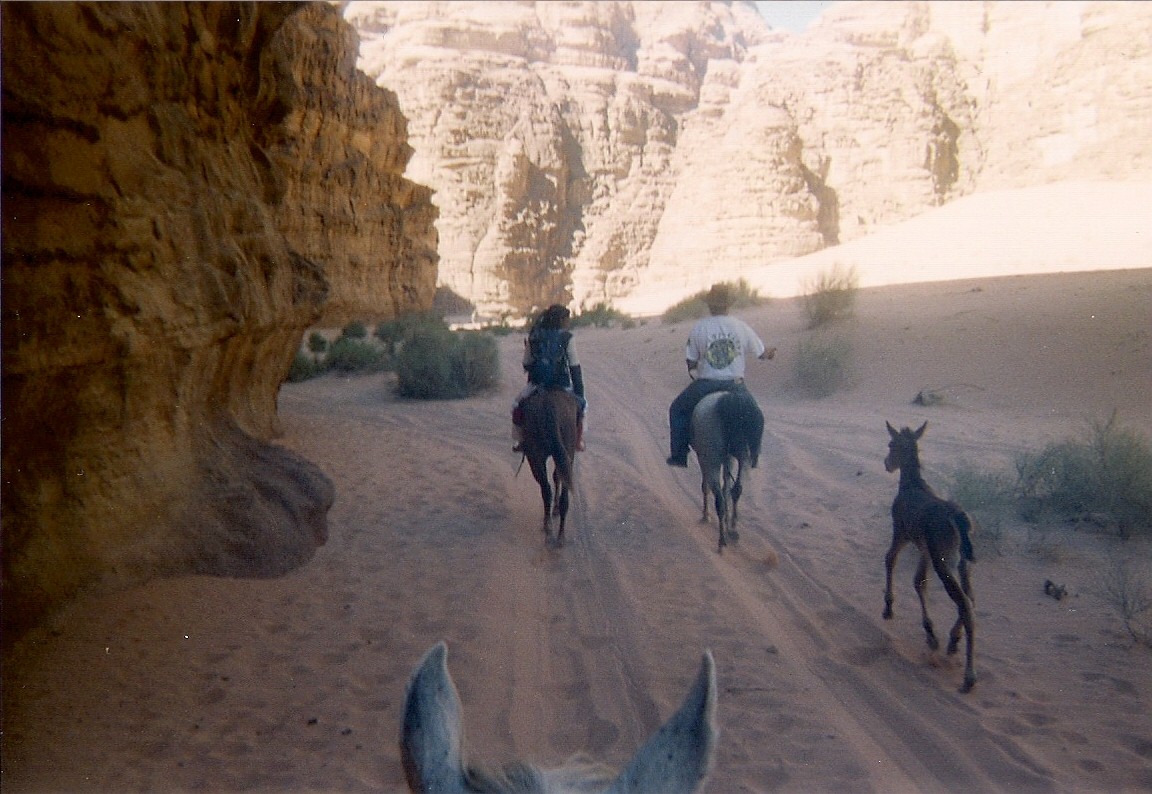
I would love to take up a nomadic lifestyle for a while, traveling to many different places and learning all about plants along the way (living off the land). For my next project (hopefully starting next year) I am planning to travel from Norway to Spain, either on foot or on horseback. I am already searching for a suitable (free) horse. Horses are given away here on a regular basis, because it is very expensive to keep them. Most of the ones that are given away are retired horses from the sport's industry, or very young and inexperienced horses. I can keep a horse for free at the farm where I live if I find a suitable horse.
I may travel to more countries as well. I would love to complete the silk route one day, also preferably on horseback. It seems like an epic journey! And while traveling I can give (free) workshops and lectures to further spread the word about alternative lifestyles and moneyless living. This is what I would like to devote the rest of my life to: to the well-being of the earth and to promoting and inspiring a more environmentally friendly lifestyle.
What is most difficult about your lifestyle at the moment? Are there any issues, concerns or obstacles you've come across?
Strangely enough I can't really think of any difficulties of this lifestyle, other than the growing fear that humanity is destroying too much nature (and will continue to do so), which threatens my way of life and that of many other life forms (including the lives of everyone who is contributing to it)... I think many other beings must be feeling this also. There is less and less undisturbed space and increasingly less room for nature to thrive and flourish. Yet it is nature that gives life to us all. Not the supermarket, not the companies and certainly not the state or government.
But that is the global perspective. Personally I have especially noticed that my life has become a lot simpler and easier and that I am a happier person and feel free. However, I can imagine that if I would get very sick (or if I would already have some serious disease) it could get a little more difficult. Therefore I am learning about natural and herbal medicine and I am trying to look after myself as best as I can. Also, I think that the average lifestyle is much more devastating to health than mine, so even that would not be a reason to give up on my dream. In any case I would do all I can to continue living this way, no matter what happens.
Our discussion on Facebook triggered quite a few reactions when you say you live your life in this way. What are the reactions of the people around you? And in the beginning?
At first most people around me thought I had lost my mind :) but fortunately this changed very quickly. When it turned out that everything I planned to do was possible, my friends and family were very pleasantly surprised and also proud of me that I made it happen (they didn't believe it was possible). On Facebook there are fortunately also a lot of positive responses, but for some people living moneyless is still too big a step. I do empathize with those people on some level, because for me the process was also gradual, so it is understandable when other people (especially if they haven't followed the blog from the beginning) don't always understand how you could do and see things differently than the usual way.
What would you like to offer the world? What changes would you like to manifest?
I would like to see us (humanity) interact with nature in a different way. That we once again consider ourselves to be one with the ecosystem we live in and that we become more aware of the resources we are using. And that once again we start to take responsibility again for the consequences of our choices for example with the kinds of purchases we make and the companies we support. I would like to see humans regain some of their self-sustainability, because that will make the world more sustainable as well. I'd like to see humanity focus more on long-term effects and solutions, instead of clutching onto the usual "throw-away" mentality. That we will once again explore how each of us can add real value to the earth, instead of just in terms of financial contributions. And that the interest of the earth is once again our main concern instead of just self-interest.
I think that moneyless living is a very suitable way to achieve all of these effects, because if you see nature as your most important and primary resource (which of course it is), then you will automatically appreciate it more and be driven to protect it.
For you, living moneyless equals freedom. But isn't it true that many people believe that the exact opposite is true? That they can use money to 'buy' their freedom, so that they can afford doing the things they really want to do or so that they can retire early?
That is true; that is the current trend and belief. And I used to believe this too. But now I see that it is actually a trap; a trap to keep people in the system. Of course there is a lot you can do if you have money, but I can do the same things without money (especially if you value experiences rather than things). And also: what is the price? If I do the things I want to do without spending money, then I don't need to earn money first and so I actually have the time to do those things. With a full-time job and high costs of living you may have money to spend, but you don't have the time anymore to do all the things you may want to do. Then you can only do things that really matter to you in weekends and during holidays. That means your life is suddenly substantially shorter! Now I can do the things that matter to me whenever I want to. Not just at some time in the future when I am retired, but now! I can even dedicate my life to a cause of my choosing.
Also, I can retire right now if I wanted to. I don't have to save up money for years, because money is not a necessity for me anymore. I don't need to stay in a job that doesn't really give me a sense of fulfillment and that doesn't give me the feeling I am contributing anything valuable. Without the need for money, nobody would do those jobs anymore. The world would be a very different place. We wouldn't have to do work that pollutes the earth. Instead we could quit working and dedicate our lives to looking after the planet and do all other things that really matter.
Working hard to eventually retire is not freedom. It is delayed freedom. You never know when it will happen. If the rules change (for example if the state pension age goes up), then it may take longer than expected, and it's not even in your hands. Someone who is free, is not bound by rules. Whatever the rules may be, I can always retire whenever I want.
That is freedom.
You point out that living without money to you means living without stress. How does that work? Because I personally (and I think many others also) feel a lot of stress when I have no money. When I don't know what I will be eating tomorrow and when I have no money to buy anything, then the pressure is very high to find a way to make money. Then it would be really comforting to be able to go to the shop to buy something.
Yes! You hit the nail on the head :) If you don't have any money, it gives you stress because we have not learned to take care of ourselves. This also makes it very stressful if you lose your job (or if the possibility exists). But what if you can just take care of yourself and you know where you can get food? What if you know that you can always rely on nature for your next meal? Then you don't have stress anymore, because you know you are always safe. You can always take care of yourself, also when the government or the system lets you down. And the system lets people down all the time. It happens every day.
If you know how to live without money, then it won't matter if you lose your job. If the supermarkets don't have any food in stock because of some environmental or political crisis, it also doesn't matter. You no longer depend on the supermarket.
Do you still visit the Netherlands sometimes? And how do you travel without money?
I have visited the Netherlands briefly last year to attend a conference (it was a work visit so the university covered the travel costs), but I was glad it was only for a few days. I noticed that the air pollution was bothering me a lot, especially on the first day. I think that happened because I was no longer used to it. When we are exposed to it all the time, we don't notice it so much anymore. This is another danger of what is happening to the earth right now: changes are gradual and so we get used to it and that makes it seem less bad than it actually is.
By the way, after I complete my job next year I will aim to travel solely by bike, (hitch)hiking, or on horseback.
Tips
Can you write a short step-by-step guide for the average consumer like me, to save money and to spend less?
1. Dumpster diving is a very good start. This is how I got started as well. (Foraging is an alternative if you don't have dumpsters nearby).
2. After this you can work on finding free alternatives for all your expenses, step by step. Every time you spend money, you can ask yourself: Do I really need this? And if so: How can I fulfill this need without spending money? And then it is a matter of trial and error; experimenting; getting creative.
3. Every alternative you come up with can also be tested for the sustainability factor. If it is not more sustainable than the ordinary way of doing things, then it may not be very valuable. It may not give you that lasting sense of accomplishment and fulfillment. You will see that if you choose to do things that are really good for the earth, they will also be good for you!
Finally, here are some links with more information, with practical tips to get started with the moneyless lifestyle:
More about the Stop-Shopping-Challenge, which started everything
More about Dumpster diving
More about Free Housing
More about the Moneyless Mindset
More about freedom (living free)